Applies To: ■ New PoliteMail ■ Legacy PoliteMail
Version: ■ 4.9+ ■ 5.0+
To perform any of these tasks, you must have Admin privileges. If you are not an Admin, please contact your local PoliteMail Administrator for assistance.
Verify your Licenses
To add, delete, or migrate a user there are a few simple steps to follow. However, before taking any action, we recommend double-checking the number of licenses you have available to cover your needs.
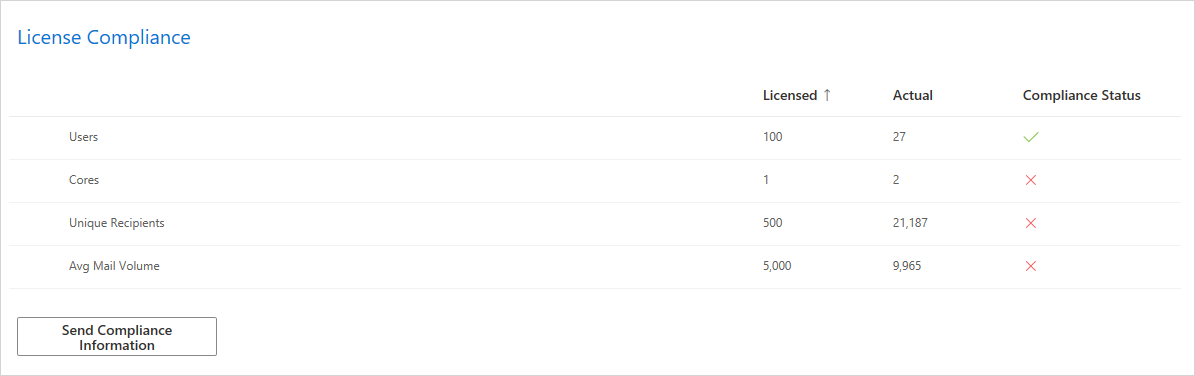
Version 5.0+: Navigate to POLITEMAIL > Account > Server Info. Scroll to the bottom of the page to view the number of users and total number of licenses.
Version 4.9x: Navigate to the Outlook > PoliteMail > Settings > Users. On the menu bar, the number of licenses used will appear next to the total number of licenses.
Updating Users with SSO
When PoliteMail is configured to use Single Sign-On (SSO), new user provisioning is handled entirely through your organization’s identity provider (IdP), such as Entra ID. No manual setup is needed inside PoliteMail. To grant someone access, the team managing the SSO application simply adds the individual to the appropriate role-based security group (e.g., Admin, User, Manager). Once assigned, the user’s group membership is passed through the SSO token during authentication, and PoliteMail automatically creates their profile with the correct permissions.
After the group assignment is complete, the user only needs to sign in through the standard PoliteMail SSO login. On their first login attempt, PoliteMail detects their identity and role from the IdP and provisions their account. If access errors occur, please reach out to PoliteMail support.
What the User Should Expect
- The user will not appear in PoliteMail until they complete their first SSO login.
- Account creation happens automatically during that login based on their assigned security group.
- Propagation delays may require waiting 5–15 minutes before retrying sign‑in.
User Actions
| To Do This... | ... Do This. |
|---|---|
| Add a User |
|
| Migrate a User |
|
| Delete a User |
|
| Reassign a License |
You may also want to set Send Setup Email to YES so the new user can get their new password and login credentials. |
User Migration and Data Migration
When an existing User is migrated to a new User, all data and Content is moved to the new User, including Templates, mailing lists, history, and Metrics.
Once the migration is done, the old user is completely removed; this means that User migration is not an option if you want to copy or clone a User.